Shower & Bathroom Leak Detection in Plainfield, NJ
We differentiate between failed waterproofing, drain issues, and pressurized pipe leaks behind custom tile to save your bathroom from unnecessary demolition.
Call (201) 510-1615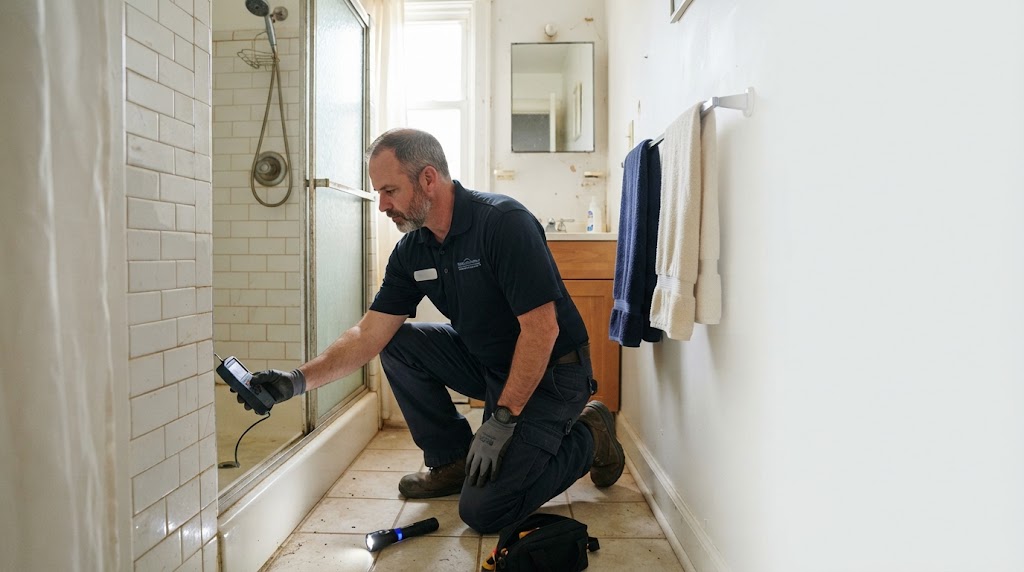
Expert bathroom leak detection Plainfield
A ceiling stain directly below an upstairs bathroom presents a complex diagnostic challenge. The water could be coming from a pressurized supply line, a leaking tub drain Plainfield, or a failure in the shower's waterproofing membrane. Our shower leak detection Plainfield NJ service systematically tests each component to identify the exact cause without unnecessarily ripping out expensive custom tile work.
In many Plainfield homes, bathrooms have been updated or remodeled over the years, layering new materials over old plumbing. A shower pan leak Plainfield is common in custom-tiled enclosures where the underlying vinyl or lead pan has deteriorated over time. Conversely, the issue might simply be a loose toilet wax ring or failed caulk around a tub escutcheon. We provide the clarity needed to proceed with the correct repair.
Identifying the Source in Wet Areas
Bathrooms combine high-pressure water, gravity drains, and extensive waterproofing. Warning signs include:
- Ceiling Stains: Brown or yellow water spots appearing on the ceiling directly beneath a second-floor bathroom.
- Loose or Hollow Tiles: Wall or floor tiles inside the shower enclosure that feel loose, spongy, or sound hollow when tapped, indicating water behind them.
- Baseboard Swelling: Peeling paint or swollen MDF baseboards immediately outside the shower curb or next to the tub.
- Persistent Mold: Mold growing rapidly on silicone caulk lines or grout joints despite regular cleaning.
- Water at the Toilet Base: Puddling water around the base of the toilet after flushing.
Our Bathroom Diagnostic Process
Because bathrooms have multiple potential failure points, our leak detection in Plainfield is methodical:
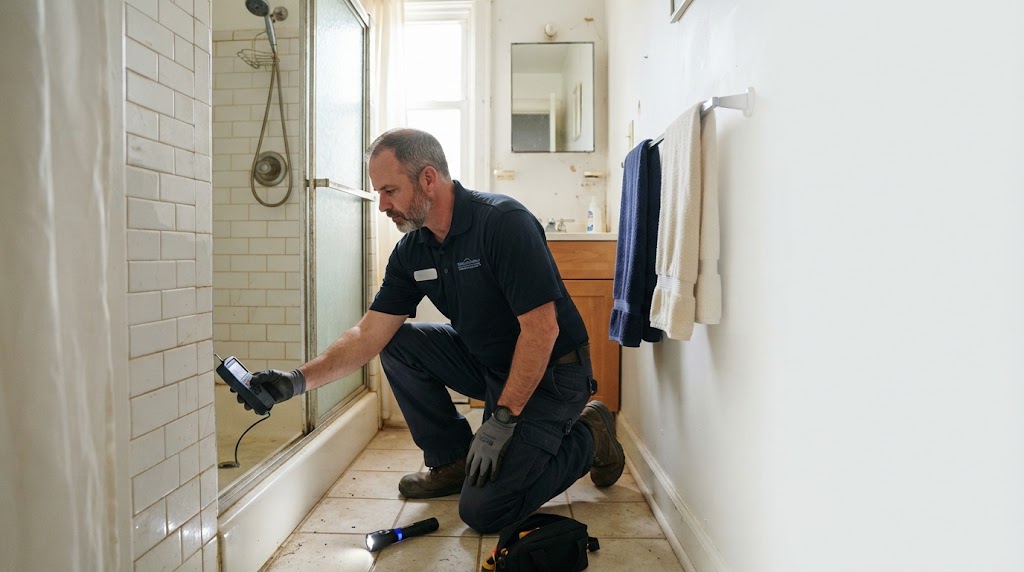
- Visual and Moisture Mapping: We scan the bathroom walls, floors, and the ceiling below with digital moisture meters to establish the perimeter of the water intrusion.
- Pressure Testing: We check the hot and cold supply lines using acoustic equipment to rule out a constant, pressurized leak behind the wall.
- Drain Inspection: We run water down specific drains while observing the ceiling below (using thermal imaging) to check for failed traps or deteriorated drain pipes.
- Shower Pan Flood Testing: We plug the shower drain and fill the pan with an inch of water. By letting it sit and monitoring for moisture spread via thermal imaging, we can definitively prove if the waterproof membrane has failed.
Repairing the Bathroom Leak
The repair cost is directly tied to the diagnosis. If the issue is a pressurized pipe, a hidden water leak detection pinpoint will guide a plumber to make a small access hole for a pipe leak repair. If the shower pan failed the flood test, the tile floor and curb will unfortunately need to be removed to install a new waterproofing membrane. If the water has spread extensively into a shared wall in a multi-family building, refer to our condo & apartment leak detection services for guidance.
We serve residential and commercial properties throughout our Service Areas. Have a question about a bathroom water issue? See our Contact page.
Frequently Asked Questions
-
How can I tell if my shower pan is leaking?
The most reliable method is a flood test. We block the drain, fill the basin with a small amount of water, and use thermal imaging to watch if the water breaches the containment area and enters the surrounding structure.
-
Does a leaking toilet mean the pipe is broken?
Usually, no. Water pooling around the base of a toilet most commonly indicates a failed wax ring seal, a loose supply line connection, or a cracked porcelain tank, rather than a broken pipe inside the floor.
-
Will you have to remove my tile to find the leak?
No, our detection process is non-invasive. We use moisture meters and thermal cameras to identify the failure point. However, if a pipe behind the tile or the shower pan itself is broken, tile removal will be necessary during the subsequent repair phase.